.jpg&w=96&q=75)
![[object Object]](/_next/image?url=https%3A%2F%2Fsolveit.dev%2Frails%2Factive_storage%2Fblobs%2FeyJfcmFpbHMiOnsibWVzc2FnZSI6IkJBaHBBc2NNIiwiZXhwIjpudWxsLCJwdXIiOiJibG9iX2lkIn19--b155170379530db4c5b45ed55d3fda633cdcdcfc%2Fimage_healthcare_ux_desktop.png&w=2048&q=75)
Healthcare products are used in stressful, sensitive and time-critical situations. Patients rely on modern digital tools to book appointments, access their medical records, communicate with providers and manage their health. Clinicians, for their part, use such tools to review information, document care and make decisions that affect patient outcomes.
Given that these products play such an important role in everyday healthcare, usability has a direct impact on both user experience and operational efficiency. When healthcare software is difficult to navigate, users may encounter confusion, delays and unnecessary obstacles that can lead to lower adoption rates and increased support workload.
This is where healthcare UX design becomes essential. Its core purpose is to make digital health products easier to use, safer to navigate and easier to understand for everyone.
The growing demand for user-centered products reflects a broader market trend. It is expected that the global UX design market will reach $25.69 billion by 2031, which highlights the increasing importance that businesses place on creating effective digital experiences.
In this article, we'll explore the key principles of UX design in healthcare, the challenges that commonly affect healthcare products and healthcare interface design best practices for creating healthcare apps, patient portals, telemedicine platforms and clinical dashboards.
What is healthcare UX design?
Healthcare UX design is the process of creating digital healthcare experiences that are usable, accessible, trustworthy and easy to navigate. UX design healthcare applies to a wide range of products, including telemedicine platforms, healthcare mobile apps, healthcare admin dashboards, administrative systems and caregiving tools.
The value of UX design for healthcare extends far beyond the interface itself. According to PwC, organizations that integrate digital experience design can provide support that fits naturally into provider workflows and patient journeys. This helps healthcare products become more effective in everyday use while encouraging engagement and long-term adoption.
It must be noted that medical UX is different from general product UX because the conditions of use are fundamentally different. In healthcare, users often interact with digital systems in moments of stress, urgency or when handling sensitive personal information, which affects how clearly and quickly they need to understand what to do. At the same time, healthcare products must serve people with different levels of digital literacy, accessibility needs and technical experience, from patients and caregivers to clinicians and administrative staff.
Why healthcare user experience design matters
The importance of medical UX design extends far beyond the interface itself.
Below, we are going to look at the key ways UX design in healthcare creates value for both users and healthcare providers.
-
Better patient engagement – effective UX for patient engagement encourages users to take a more active role in managing their health and communicating with care teams.
-
Reliable appointment completion – strong healthcare app usability makes scheduling, rescheduling and appointment reminders easier to manage, which helps reduce missed visits.
-
Smooth onboarding experience – intuitive healthcare onboarding flows help new users get started quickly, thereby reducing confusion and minimizing drop-offs.
-
Improved treatment adherence – healthcare accessibility, medication reminders and progress-tracking features make it easier for patients to follow prescribed care plans.
-
Efficient provider workflows – well-structured interfaces help clinicians access information faster and spend more time focused on patient care.
-
Reduced administrative friction – streamlined workflows decrease repetitive manual tasks and improve efficiency for administrative teams.
-
Stronger trust and credibility – transparent interactions, clear communication and thoughtful HIPAA-compliant design altogether help users feel more confident when sharing sensitive health information.
-
Reduced support demand – effective healthcare mobile app UX makes common tasks easier to complete independently, thus reducing the need for support requests.
What makes UX design in healthcare different?
Compared to many consumer and SaaS products, healthcare solutions are used in more sensitive, complex and high-stakes environments. As a result, UX design healthcare places greater emphasis on clarity, trust and usability than on sophisticated visuals or feature-heavy interfaces.

Now we will delve into aspects that make medical UX different.
-
Emotionally sensitive user journeys – users may be managing a diagnosis, awaiting test results, caring for a loved one or making treatment decisions, which makes healthcare workflow UX particularly important in reducing uncertainty and helping people move through critical tasks with confidence.
-
Stress or cognitive load – when people are experiencing anxiety, pain, urgency, or information overload, even simple actions can feel challenging. Interfaces should therefore make key information and next steps immediately understandable.
-
Accessibility needs – accessibility is a fundamental part of healthcare app usability because healthcare products must accommodate users with different visual, hearing, motor and cognitive abilities.
-
Older and non-technical users – many patients interact with digital healthcare tools only occasionally, thus straightforward healthcare app navigation, familiar design patterns and plain language help make these experiences more approachable.
-
Multiple user roles – compared to many digital products that serve a single audience, some health UX platforms tend to support patients, physicians, nurses, caregivers, family members and administrators within the same system.
-
Data-heavy workflows – from medical records and appointment schedules to treatment plans and documentation, healthcare systems manage large amounts of information that must remain easy to access and interpret.
-
Compliance and privacy expectations – trust plays a central role in patient experience design, which is why users expect transparency around how their information is collected, stored and shared throughout their interactions with a healthcare product.
Design healthcare UX users can trust - Clear, safe and easy-to-use
Contact usCore principles of effective healthcare UX design
We should mention that different healthcare products serve different users, workflows and use cases, which is why requirements can vary significantly from one solution to another.
But even so, the most successful health UX products tend to follow a common set of principles that allow for UX optimization as well as improve usability, engagement and trust.
Below are some of the key healthcare user experience design principles.
Clarity over visual complexity
An effective healthcare user experience should make the next step obvious and easy to follow. Straightforward navigation, intuitive layouts, meaningful labels and clear calls to action help users complete tasks with confidence, particularly when time is limited or information is sensitive.
Accessibility and inclusive design
Following WCAG and healthcare accessibility guidelines helps ensure that users can access information, navigate interfaces and complete important tasks without unnecessary barriers. Features such as sufficient color contrast, readable typography, large touch targets, keyboard navigation and simple language all contribute to a more inclusive experience.
Reduced cognitive load
Effective healthcare workflow UX helps users focus on the most important actions by simplifying journeys, reducing unnecessary steps and presenting information in a structured and digestible way.
Trust and transparency
Trust is an essential component of patient experience design. Users should always understand what action they are taking, how their information is being used, the status of requests or appointments and what they can expect next.
Role-based UX
Patients, providers, administrators, caregivers and family members often use the same platform for different purposes and with different goals in mind. Thus, a healthcare UX designer should adapt workflows, content, and information visibility to each user group, helping them access relevant information more efficiently.
Mobile-first usability
A growing number of healthcare interactions now take place on smartphones and tablets, from appointment scheduling and telehealth visits to medication management and patient communication.
Therefore, a strong healthcare mobile app UX should ensure that these experiences remain responsive, easy to navigate and simple to complete on smaller screens.
Healthcare apps: examples and what businesses can learn from them
Read articleCommon healthcare UX challenges
Now, let’s explore some healthcare UX design challenges that you need to be aware of so as to better understand where usability issues appear most often and how they can affect both patients and healthcare providers.
-
Confusing onboarding – users may struggle to get started when setup steps, permissions or required actions are not explained in a simple and structured way.
-
Overloaded dashboards – displaying too much information at once can make it difficult for users to identify priorities and focus on the tasks that matter most.
-
Too many form fields – in medical UX design, long or repetitive forms often increase completion time, contribute to user frustration and lead to higher abandonment rates.
-
Unclear appointment or telemedicine flows – when booking processes or virtual visit journeys lack structure, users may feel uncertain about what to do next or whether an action was successfully completed.
-
Weak accessibility – effective UX design for healthcare should accommodate different abilities and accessibility needs; otherwise, some users may face unnecessary barriers when accessing services or information.
-
Inconsistent mobile and web experiences – differences in functionality, navigation and interface behavior across devices can create confusion and disrupt user workflows.
-
Fragmented patient and provider workflows – strong medical UX design depends on connected experiences; when systems fail to work together, users often need to repeat actions, switch between tools or manually transfer information.
-
Legacy systems and outdated interfaces – older designs may no longer support modern healthcare workflows efficiently, creating friction in everyday tasks and limiting overall usability.
Healthcare UX best practices for digital products
Below, we’re going to look at healthcare UX best practices that every healthcare UX designer should follow so as to create usable, efficient and trustworthy digital products.

-
Simplify registration and onboarding – keep initial setup short and structured so users can get started without confusion or unnecessary steps.
-
Reduce unnecessary steps – remove extra clicks, repeated actions and any redundant inputs so healthcare user experience feels straightforward and efficient.
-
Use clear labels and plain language – replace technical or clinical jargon with terms that patients and providers can easily understand in context.
-
Make appointment, payment and document flows easy to follow – design these key journeys so users always understand where they are in the process and what step comes next. In an online medical appointment booking system, users should be able to choose a time slot, confirm the visit, reschedule or cancel without wondering whether the action was completed successfully.
-
Show status clearly – use progress indicators, confirmations and updates to support transparency and improve the product’s UX/UI during task completion.
-
Design for interruptions – assume users may pause and return later, so workflows should preserve context and let them pick up exactly where they left off without losing progress.
-
Make dashboards scannable – structure information so key data is immediately visible, helping users quickly identify what matters most.
-
Test with real healthcare users – validate designs with patients, clinicians and administrative staff to ensure solutions reflect real-world usage.
-
Validate accessibility early – integrate accessibility checks during design and prototyping.
-
Prototype before full development – test workflows early to identify usability issues before they become costly to fix in later stages.
Where healthcare UX matters most: examples
-
Patient portals – platforms where users book appointments, view medical results and manage health information, requiring strong clarity, structure, and trust. If you are planning a similar product, explore how custom patient portal development can support patient-facing workflows.
-
Telemedicine – video consultation flows, scheduling, and communication tools that must feel simple, stable and reliable in time-sensitive healthcare situations.
-
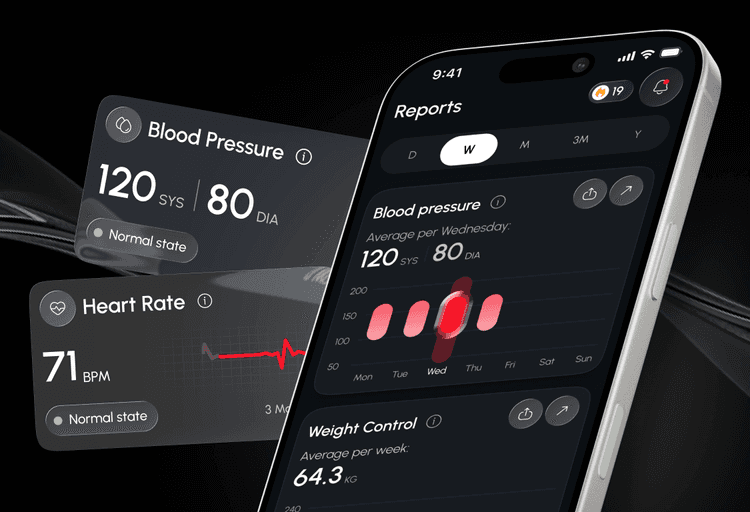
Healthcare mobile apps – tools for everyday health management that require minimal steps, clear navigation and strong usability on the go. For example, a blood pressure app should make it easy for users to add health data, review changes over time, and understand what the numbers mean without feeling overwhelmed. For a broader comparison, see our overview of blood pressure and heart rate apps that help users track readings, heart rate, reminders, and health trends.
-
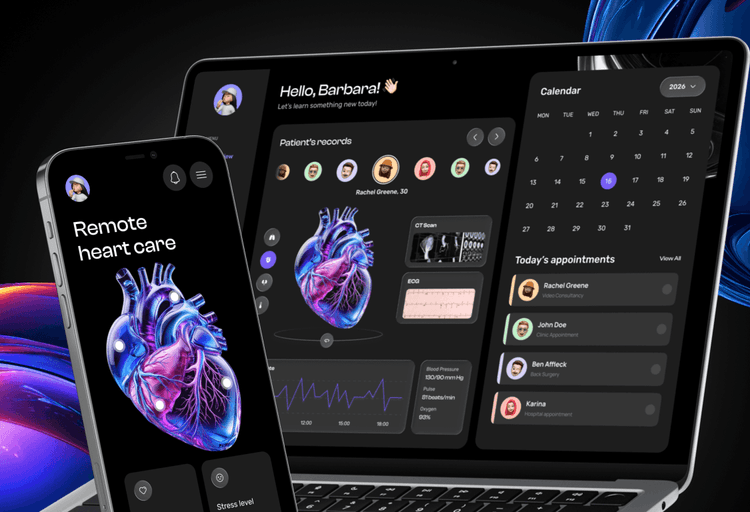
Provider dashboards/doctor dashboards – clinicians rely on fast access to patient data, so strong information hierarchy and system speed are critical for effective decision-making.
-
Caregiving platforms – systems that help families and care teams coordinate care where shared understanding, updates, and clarity are essential for daily decisions.
Business digitalization: all you need to know
Read articleWhen healthcare products need a UX redesign
Now, let’s check out the most common situations where a UX redesign becomes necessary in healthcare products.
-
Users drop off during onboarding – a high abandonment rate during first-time use usually signals that setup steps are unclear, too long or not aligned with user expectations.
-
Patients contact support for basic tasks – frequent questions about simple actions suggest that key healthcare workflows are not intuitive enough to guide users through common tasks.
-
Providers avoid using the system – when healthcare professionals bypass the platform in favor of alternative tools or manual processes, it is often a sign that key workflows are difficult or inefficient to complete.
-
Workflows require too many clicks – excessive steps for routine actions slow down daily operations and make healthcare processes less efficient than they should be.
-
The mobile experience feels inconsistent – differences between mobile and desktop interactions can create confusion and make it harder for users to complete tasks reliably.
-
Dashboard information is difficult to interpret – poor visual hierarchy, cluttered layouts or information overload can make important data harder to find and understand.
-
Users encounter accessibility barriers – user feedback, audits, or usability testing reveal barriers that make the product difficult to use for people with different abilities.
-
Product looks outdated or does not support current workflows – outdated interfaces and legacy design patterns can reduce trust, hinder adoption and make common tasks more difficult than necessary.
Not sure if your healthcare product needs a redesign? Start with a UX audit
Contact usHow SolveIt approaches healthcare UX design
For over a decade, we have helped healthcare organizations design digital products that are intuitive, accessible and aligned with the realities of clinical workflows and patient needs.
Our work spans every stage of the product lifecycle, from discovery and UX research to design, development and scaling.
Below are the key areas of our healthcare UX design approach.
-
Product discovery and direction – we start with analyzing user needs, clinical context and system constraints during the discovery phase to define what the product should solve in real healthcare workflows.
-
UX research and workflow analysis – our experts study how patients, clinicians and administrative staff interact with systems to identify friction points and improve task flows.
-
Healthcare mobile and web product development – we provide healthcare app development and web application development services, building solutions that support everyday healthcare delivery across mobile and desktop environments with a focus on usability and consistency.
-
Patient and provider experience design – our team designs for both sides of healthcare journeys, ensuring patients can easily complete tasks while providers can work efficiently with structured information.
-
Accessibility and usability design – we apply accessibility standards and usability principles to make sure that healthcare products remain usable for people with different abilities and levels of digital experience.
-
UX/UI design and engineering alignment – we connect product design with technical execution, helping ensure that user experience goals are preserved from concept through implementation.
-
MVP development, redesign and platform scaling – we support early-stage product validation, full redesigns and long-term healthcare platform scaling as needs evolve.
looking to improve healthcare UX? Let’s discuss your product
Contact usOur healthcare product experience
We provide healthcare UX design services across a range of products, including medicine portals, caregiving solutions and healthcare dashboards.
We also have experience working on healthcare AI solutions and telemedicine workflows, with a focus on improving usability, simplifying complex clinical processes, and supporting real-world healthcare operations across web and mobile platforms.
So, for instance, in our AI-based caregiving platform project, our designers carried out a full redesign of the web platform, which later became the foundation for building consistent native iOS and Android applications. As part of the process, we also developed a new design system, refined the visual language while preserving key brand elements such as the logo and core color palette, and introduced UX improvements that simplified user flows and reduced friction in line with iOS and Android guidelines.
Apart from that, in the telemedical web app solution for a clinic network, the SolveIt team designed the user interface based on existing brand guidelines as well as modernized the overall experience to meet current industry standards. We focused on usability and simplicity throughout the design process, creating a system that was easy to navigate, quick to adopt and practical for day-to-day clinical work.
Closing thoughts
Healthcare UX design goes far beyond visual presentation. It shapes how people access care, complete important tasks, understand medical information and interact with digital healthcare systems in moments that carry real weight.
When done well, healthcare UX reduces friction in everyday workflows, supports better decisions and helps both patients and providers move through digital processes with greater ease. Plus, it brings together usability, accessibility, workflow understanding, trust and thoughtful technical implementation into one connected experience.
If you need help improving healthcare UX in your product, feel free to reach out to the SolveIt team. We’ll be glad to help you design and enhance digital healthcare experiences across web and mobile platforms.
FAQ
What is healthcare UX design?
Healthcare UX design is the process of creating digital healthcare products that are easy to use, accessible and trustworthy for patients, providers and administrative staff. It focuses on helping users complete important healthcare tasks without confusion or unnecessary effort.
Why is UX important in healthcare?
UX is important in healthcare because it affects how patients and providers complete essential tasks in digital systems, from booking appointments to accessing medical information and managing care. Good UX also reduces confusion, helps users finish tasks faster, improves accessibility for different user groups, and lowers support demand.
What makes medical UX design different?
Medical UX design differs from general consumer and SaaS product UX because it is used in high-stakes and sensitive situations where patients and providers often deal with stress, time pressure, and complex information. It also needs to support users with varying levels of digital literacy, multiple roles within the same system, and strong expectations around privacy, accessibility, and trust.
What are examples of healthcare UX?
Examples include portals for viewing test results and booking appointments, telemedicine platforms for virtual visits, mobile health apps for tracking conditions, provider dashboards for clinical data, and caregiving tools used by families and care teams.
What is healthcare user experience design?
Healthcare user experience design refers to how people interact with digital healthcare systems across different touchpoints, including mobile apps, web platforms, and internal clinical tools. It focuses on making these interactions simple, clear and reliable.
How do you improve UX in healthcare apps?
We improve UX in healthcare apps by starting with an understanding of how patients, clinicians, and administrative staff use the product in real healthcare workflows. From there, we analyze existing journeys, identify where users face friction, delays, or confusion, and translate these findings into structured UX improvements across key flows such as onboarding, appointment booking, and access to medical information.
We then redesign and prototype these flows to make interactions more intuitive, reduce unnecessary steps, and ensure the product supports both patient-facing and provider-facing tasks in a consistent way.
Why is accessibility important in healthcare UX?
Accessibility is important in healthcare UX because digital health products are used by people with a wide range of abilities, ages, and levels of digital experience, often in situations where clarity and ease of use directly affect care.
Accessibility ensures that patients and healthcare professionals can read, navigate, and complete essential tasks without barriers, whether they relate to vision, hearing, motor skills, or cognitive load.
When should healthcare software be redesigned?
Healthcare software should be redesigned when users struggle with onboarding, workflows feel slow or confusing, support requests increase, dashboards are hard to interpret, or when the product no longer matches current healthcare processes.
What does a healthcare UX designer do?
A healthcare UX designer researches user needs, maps healthcare workflows, and designs interfaces that support patients, providers, and administrators. Their work focuses on improving usability, safety, and efficiency across digital healthcare products.