.png&w=96&q=75)
.png&w=96&q=75)
![[object Object]](/_next/image?url=https%3A%2F%2Fsolveit.dev%2Frails%2Factive_storage%2Fblobs%2FeyJfcmFpbHMiOnsibWVzc2FnZSI6IkJBaHBBbEFMIiwiZXhwIjpudWxsLCJwdXIiOiJibG9iX2lkIn19--ad44bed8be0c52436c8f6060635d27957ff2f155%2Fcover_min.png&w=2048&q=75)
90% of startups fail before getting their first paying customers because their ideas lack real market validation. Custom software development changes this by helping you launch a working MVP with modern UI/UX, secure infrastructure, and scalable architecture in just 3–6 months, so users can start testing and paying for your product early. An iterative approach reduces risk: you launch with core features, gather real feedback, and then extend functionality step by step as demand is confirmed, instead of burning your entire budget on a full-scale development from day one.
At SolveIt, we've guided dozens of early-stage founders through this exact process, turning ideas into apps that validate fast, secure investment, outpace competitors and bring revenue.
In this article we cover all the necessary components of successful startup software development, starting from overview and reasons to build сustom software for startups, outsourcing vs in-house approach, and going through tech stacks, MVP building, costs, and finding the best startup software development partner possible.
Why do startups need custom software development
Startups live in the arena of speed, pivots, and differentiation. Custom software lets you build from the ground up, exactly for your unique vision. Rapid prototyping tests ideas in weeks, not months. Tailored workflows match how your team actually works. Scalable architecture handles explosive growth from the start, so technology never becomes your bottleneck.
The numbers prove the positive market dynamic: Custom software development market reached $52.8B in 2025 and is projected to reach $146B by 2030 with 22.6% CAGR (Grand View Research). This explosive expansion shows businesses worldwide increasingly demand tailored solutions that drive real results over generic alternatives.
Here are more points to prove the importance of custom software development for startups.
.png&w=2048&q=75)
1. Perfect business model fit
Startups thrive on novel ideas. Custom software development aligns every feature with your specific processes, avoiding workarounds that waste time. Result? Smoother operations, faster execution, happier teams, and core value proposition delivered exactly as founders envisioned.
2. Faster time-to-market
Custom approaches let you launch core features quickly (3-6 months for MVPs), test with users, and iterate based on real data. With Agile sprints you see progress immediately and adjust direction based on live metrics.
3. Long-term cost efficiency
With custom software you build once, own forever. Your technology becomes a business asset instead of an expense. Scale to millions of users or add features without new licensing fees, every dollar spent compounds as your company grows.
4. Full roadmap control
Full IP ownership means you own the velocity. Launch new revenue channels, redesign UX, scale user capacity 10x: no layers of coordination or approval chains slowing your execution. Software projects often fail from misaligned stakeholders, tech/business disconnects, and competing team priorities (Forbes). Your custom solution eliminates all three: one team, your roadmap, zero friction.
5. Superior security built-in
Handling user data? Custom software development embeds high-grade security like multi-factor authentication, encryption, and compliance (GDPR/HIPAA) from the start. Your security team controls every access point, every data flow, and every compliance requirement, which protects your reputation.
6. Seamless integrations
Connect your tech stack effortlessly. For instance, APIs for Stripe payments, Zapier automations, or internal tools. No data silos or duplication, everything flows, saving hours weekly and preventing errors that plague software projects.
For early-stage products, software integrations should be planned before the MVP starts growing too quickly. Billing, analytics, CRM, notifications, admin panels, and internal tools need to exchange data reliably, otherwise the team may end up fixing fragmented workflows instead of improving the product.
7. Easier investor funding
A robust, scalable custom platform signals strong technical control and long-term vision, which strengthens your investment case. Custom software provides full ownership, proprietary technology competitors cannot replicate, and architecture ready for scaling, all of which make your startup more attractive to investors.
8. Pivot-ready scalability
Your MVP today needs to handle 10 users; in a few months, 10,000. Custom software is designed to scale seamlessly, add microservices, cloud integration (AWS/Azure), or user loads without full rewrites. No more outgrowing your tech stack mid-pivot, which often hits startups.
9. Higher user retention
Custom apps deliver zero-lag performance + addictive UX that feels intuitive. Up to 90% of users stop using apps that perform poorly or constantly glitch, which shows how unforgiving bad UX and performance issues are (UserGuiding Research). Custom software eliminates this friction: tailored speed, intuitive flows and advanced personalization help users stay longer, return frequently, and advocate for your product.
In short, custom software minimizes waste of resources, accelerates validation, and positions you for explosive growth. Next, it makes sense to explore when it’s better to outsource software development for startups instead of building everything in-house.
Top reasons when startups outsource software development
1. Cost savings
Engineering salaries, benefits, and hiring processes quickly burn runway, while hourly or project-based cooperation keeps costs predictable. Eastern European developers rates are often significantly lower than typical US rates, allowing the same budget to fund a more complete MVP and early iterations instead of just covering initial hires.
2. Fast hiring
When acquisition works and users grow 5–10x, internal teams can't scale fast enough. Outsourcing brings senior developers, designers, QA specialists, and DevOps engineers onboard in 1 week, not months, avoiding slowdowns and emergency hiring.
3. Access to a wider pool of talent
AI/ML, AR/VR, blockchain, or complex integrations are hard to cover with a small founding team. Hiring specialists in-house can take months and require high annual commitments, but outsourcing gives startups access to niche expertise with relevant portfolios.
4. Reduced management overhead
Managing developers, roadmaps, code reviews, and releases can consume most of a non-technical founder’s week. Outsourcing offloads execution and day-to-day delivery, so founders can spend their time on customers, sales, partnerships, and strategy.
5. Risk mitigation
Experienced product teams bring structured processes, clear scoping, and measurable milestones that reduce the risk of runaway timelines and budget burn. This lets startups test more ideas, new features, pivots, or products, all with contained risk, then double down only on what shows traction, eliminating all the rest.

Find out if software development outsourcing fits your startup. Book a free consultation now!
Contact usStartup software development: tech stack and building MVP
"For startups, the tech stack is not about 'trendy frameworks' but about how fast you validate the idea, how much you spend, and how painful it will be to scale later. The tech stack should support quick MVP delivery, frequent iterations, and predictable costs over the first 12–24 months, not just launch day."
– Andrei Savich, CTO, SolveIt
Principles of a startup-ready tech stack
A startup-oriented tech stack usually follows several core principles described aligned with SolveIt’s approach:
-
Cost-conscious. Uses open-source technologies and managed cloud services to keep the initial budget under control while preserving flexibility.
-
Scalable from MVP to growth. Allows you to start with simple architecture and then scale users, data, and features without a full rewrite.
-
Agile-friendly. Supports short iterations, continuous delivery, and fast feedback loops (Lean, Scrum, Kanban are common choices for managing the process on top of the tech stack).
-
Integration-ready. Exposes clean APIs and works well with payment systems, analytics, CRM, marketing tools, AI integration, and startup infrastructure in general.
In practice, we recommend a modern web/mobile tech stack, but the exact technologies and architecture are defined after a consultation that clarifies your product, budget, and growth plans.
Recommended tech stack for startup MVPs
Below is a structure that reflects how we usually approach custom software development for startups, from MVP development to launch and product scaling.
Core layers
-
Mobile. Cross‑platform framework (Flutter as a primary choice) to deliver iOS and Android apps from a single codebase.
-
Frontend (web). React or similar modern framework for fast UI iteration and rich interfaces.
-
Backend. Node.js, .NET, Java, or similar stack with REST/GraphQL APIs and modular architecture that can grow into microservices when needed.
-
Database. PostgreSQL or another relational DB for transactional consistency; in some cases, NoSQL (e.g., MongoDB) is added for specific workloads.
-
Cloud infrastructure. AWS, GCP, or Azure with containerization (Docker, Kubernetes) or serverless where appropriate, to reduce operations overhead and scale on demand.
Supporting components
-
CI/CD pipeline for automated builds, tests, and deployments (Git-based workflows, pipelines in the chosen cloud).
-
Monitoring and logging (e.g., application performance monitoring, error tracking, centralized logs) to detect issues early and keep MVPs stable at adequate app development cost.
-
Security basics by design: role-based access, encrypted data in transit and at rest, secure coding practices, and compliance checks where required (GDPR, HIPAA, PCI DSS).
This structure mirrors how reputable vendors describe “startup-ready” architectures: tight core stack, minimal operational friction, clear path from MVP to a more complex product.
Why Flutter is a strong choice among startups for developing mobile MVPs
"Most IT outsourcing companies list frameworks as interchangeable options. Wrong. Cross-platform Flutter cuts startup MVP budgets by 30-50% and ships an app that works on iOS+Android simultaneously in 12 weeks vs native's 5-9 months. When runway = survival, single codebase economics win almost every time."
– Ilia Kiselevich, CEO & Founder, SolveIt
Flutter stands out in several aspects that matter specifically for early-stage products:
-
Accelerated development. Hot reload and shared UI logic across iOS/Android enable faster releases. Startups iterate user flows in seconds instead of days, getting real feedback into production rapidly.
-
Cost-effective development. One Flutter codebase replaces two separate native teams. This cuts engineering effort by 30-50%, lowers total cost of ownership, and stretches startup runway further.
-
Easier maintenance. Bug fixes, updates, and new features deploy once across all platforms. No duplicating changes between iOS/Android codebases saves engineering bandwidth for growth features.
-
Near-native performance. Modern materials emphasize that Flutter achieves smooth animations and responsiveness without the overhead typical for some hybrid approaches, which is critical when user experience is a differentiator.
-
Rich ecosystem integrations. Ready-made plugins for Stripe payments, analytics, maps, and authentication eliminate custom bridges. Third-party integrations that take weeks in native apps complete in days.
Startup software development process: step-by-step
As a founder you need clear timelines and deliverables to plan budgets confidently. Here's SolveIt's proven software development process for startups.
-
Discovery phase
The process begins with the discovery phase. You get product backlog and roadmap, technical stack and architecture, proposal with development plan, budget and monetization strategy. Also creating a pitch deck for investors is available upon request.
-
UX/UI design
Expert designers then create mobile-first prototypes for 5-7 core screens targeting your specific audience. Design concepts and wireframes with user journeys ensure intuitive experience and scalable design systems, with fast handoff to development.
-
Development
During the development phase our experts build mobile or web solutions with proven frontend/backend integrations. Dedicated development team delivers high-performing, stable, scalable architecture through transparent daily updates and full-cycle process, guaranteeing production-ready code.
-
QA and testing
Quality assurance + security provides comprehensive app health check: UI/UX audit, code audit, security/compliance review (HIPAA/GDPR), device/platform compatibility testing across all devices, guaranteeing bug-free release candidate ready for stores.
-
Launch + support
Finally, during the launch and support our experts handle App Store submission or web release, plus ongoing maintenance and SLA support for sustained revenue generation.
How much does software development cost for startups
Software development costs for startups vary widely, from $35,000 simple apps to $200,000+ feature-rich apps. Depends on complexity, team location and rates ($25-$250+/hour), features, platforms.
Cost breakdown by project type
-
Basic: $35,000-$70,000 (core features, simple tools, single platform like iOS or Android).
-
Medium complexity: $70,000-$120,000 (custom designs, integrations, multi-screen apps).
-
Feature-rich: $120,000+ (advanced scalability, multiple platforms, compliance).
Key factors driving costs
-
Complexity: More screens, features, custom integrations add cost.
-
Team location: Eastern Europe $35-100/hour vs. USA $100-250+/hour (60-70% savings).
-
Platform: Web + iOS + Android multiplies effort; Flutter cuts 30-50%.
-
Tech Stack: Proven and modern tech stacks like Flutter/Node.js/React keep costs predictable.

Ready to get your software development estimate? Contact SolveIt now!
Contact usHow to find the best startup software development company for your project
Your startup's runway greatly depends on whether you are able to find the right development partner. Wrong choice burns cash through delays and rework. A reputable software development company for startups delivers MVP on time and on budget, validates your idea, and extends runway 6-12 months. To choose the right partner and avoid costly mistakes, follow a structured selection process like this one.
1. Define project requirements
Document core features, target users, tech needs, and preferred delivery model, such as Flutter, AI, or outsourced product development. Then match companies with relevant industry expertise, startup track record, and proven experience among software development outsourcing companies, not generic portfolios.
2. Research & shortlist
Check Clutch/GoodFirms 4.9+ ratings. Verify code ownership guarantees, App Store links, and delivery history. Focus on expertise you require (e.g. real estate, healthcare, ecommerce, AI) and similar project types. Review the portfolio for project complexity, scale, and delivery timelines to see how they handle cases comparable to yours.
3. Test delivery & transparency
Require regular standups, real‑time Jira access, and fixed milestones with payments (discovery – design – MVP – launch and support). Keep a healthy balance between pace and quality. Look for rates that fit your budget, combined with a clear bug‑fix warranty to keep costs predictable and quality under control.
How to hire developers for startups
Read article4. Secure long-term scalability & legal part
Verify pipelines from the start, HIPAA/GDPR compliance audits, two-factor authentication (2FA) security. Choose midsize teams with enough capacity without enterprise bureaucracy. Ask about certifications if necessary (e.g.AWS/GCP).
5. Verify post-launch support
Confirm 1-month SLA included, defined bugfix timelines, feature expansion pricing. Understand who handles monitoring, updates. Ensure full documentation + 2-week knowledge transfer for your team. Verify incident response process and infrastructure handover protocols. Also, ensure your ITSM processes are clearly documented to support efficient incident tracking, service requests, and ongoing maintenance.
How to launch an app
Read article6. Test сultural & strategic fit
Cultural mismatch causes 2x more friction and is one of the main reasons projects fail. During discovery calls via VoIP or regular phone calls, check if the tech partner understands startup economics (LTV/CAC, churn, burn rate) and if you feel comfortable working with them long-term. Do they speak your language, understand your pressure, and feel like true partners, not just contractors?
See how SolveIt can be your startup's strategic partner. Book a free consultation today!
Contact usCustom software development for startups: SolveIt portfolio
Real founders share what actually works. When startups partner with the right software development company, they get apps that make money, not just prototypes. Our case studies show how our teams turn ideas into revenue-generating businesses through our software development services for startups.
Mobile app examples
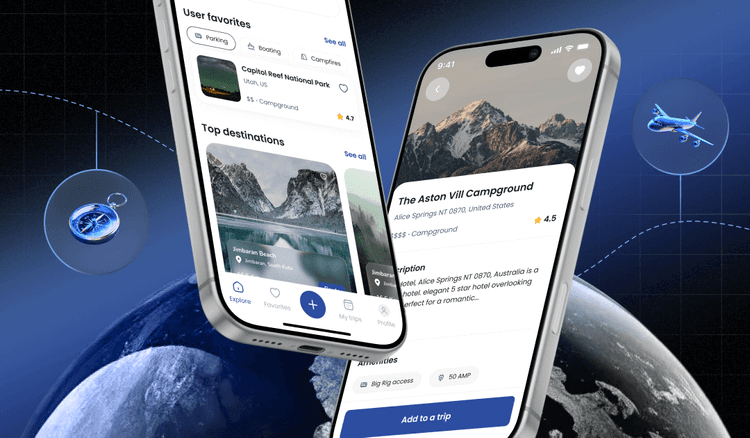
Created USA's first all-in-one RV app for a former Microsoft executive. Integrated 25K+ resorts, 60K points of interest, offline sync across iOS/Android/Web. Single codebase cut maintenance 40%, enabling rapid feature updates while founders focused on user acquisition.
Developed AI chatbot for daily planning with calendar/health integration. iOS/macOS MVP delivered in 4 months. Achieved 5-star App Store rating, 1.5K downloads in 3 months with ChatGPT + custom AI model.
Built real-time energy monitoring + optimization for an energy company. Gamification + personalized insights drove user behavior change, creating subscription retention loop. Beta users saved 23% on bills, rising to 26% post-launch, validating market fit.

Web platform examples
Rescued failed vendor project in 6 months: built 3-way property exchange system with subscription monetization and boosted listings. Backend optimization improved performance 3x, unlocking multiple revenue streams through live App Store presence.
Digitized offline appliance workflows with real-time order tracking, seller/buyer dashboards, subscription model, a practical example of digitalization of business turning manual operations into a scalable digital product. 27% conversion lift from streamlined UX proved ROI to stakeholders. Scalable architecture handled 3x user growth without rearchitecture.
Built telemedicine platform for leading clinic network across 8 cities. Video consultations, appointment scheduling, AES-encrypted patient data. React web app streamlined doctor workflows and boosted patient satisfaction.

Conclusion
Software development for startups demands more than code, it requires strategy. This guide covered everything founders need: why startups should consider custom software development, when outsourcing is the better option, proven tech stacks, realistic costs, and the step-by-step process to pick the right development partner.
The right partner turns limited runway into revenue-generating products through detailed discovery roadmaps, predictable MVP delivery, and investor-ready execution. SolveIt helps founders navigate complexity with broad domain expertise, full-cycle development, and post-launch support, focusing your resources on growth.
Ready to build your custom software? SolveIt's free consultation provides you with an exact budget, timeline, and tech stack. Book discovery call now!
FAQ: Software development for startups
How much does software development for startups cost
The cost of developing software for a startup can be anywhere from $35,000 (for a basic MVP) to $200,000 or more (for apps with lots of features). The exact price depends on how complicated the project is, where the team is located, what platforms it will be on, and what features it will have.
Cost breakdown by project type:
-
basic: $35,000-$70,000 (core features, simple tools, single platform like iOS or Android).
-
medium complexity: $70,000-$120,000 (custom designs, integrations, multi-screen apps).
-
feature-rich: $120,000+ (advanced scalability, multiple platforms, compliance).
Why do startups need custom software?
Key advantages why startups need custom software include:
-
perfect business model fit
-
faster time-to-market
-
long-term cost efficiency
-
full roadmap control
-
superior security
-
seamless integrations
-
easier investor funding
-
pivot-ready scalability
-
higher user retention
When do startups outsource software development?
Startups outsource to stretch runway 6-12 months, access expertise fast, and stay focused on revenue. Wrong timing kills velocity; right timing leverages global talent without equity dilution.
Top reasons:
- cost savings
- fast hiring
- access to a wider pool of talent
- reduced management overhead
- risk mitigation
What is the best tech stack for startup software development?
Flutter + React + Node.js stack delivers iOS/Android/web MVPs in 12 weeks at 30-50% lower cost vs native. No rewrites are needed; this teck stack is scalable from start.
Core tech stack:
-
mobile: Flutter (single codebase iOS+Android)
-
web: React (fast UI iteration)
-
backend: Node.js/Java (REST/GraphQL APIs)
-
database: PostgreSQL/MongoDB
-
cloud: AWS/GCP (Docker/serverless)
Flutter advantage: 12-week cross-platform vs 5-9 months native. Hot reload + native performance = startup velocity.